
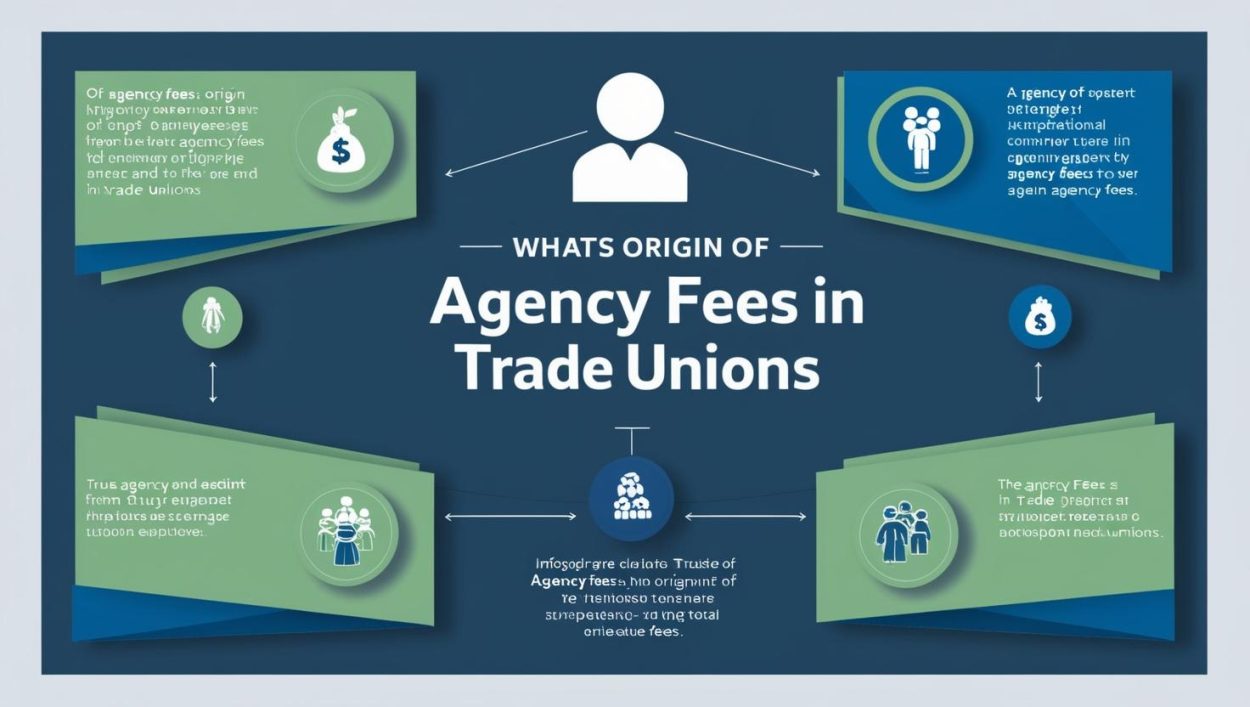
The practice of agency fees in trade unions dates back to early labor movements, particularly in the United States and Europe in the 19th and early 20th centuries, when unions negotiated on behalf of all workers in a workplace or sector, whether or not the workers were union members. This arrangement created a “free rider” problem, where non-union members benefited from the union’s efforts in securing better wages, working conditions, and benefits without contributing to the costs of negotiation and collective representation.
To address this, agency fees (or union security fees) were introduced. These are payments that non-union members are required to make to the union to cover the costs of collective bargaining, contract administration, and grievance handling. The rationale behind agency fees is that all workers who benefit from the union’s negotiation should share the costs.
Merits of Agency Fees
- Prevents Free Riding: Agency fees ensure that non-union workers contribute their fair share toward the union’s efforts. This prevents free riders from benefiting from union negotiations without contributing to the costs.
- Stronger Unions: With a broader funding base, unions can have more resources to advocate for better working conditions, wages, and other benefits. This strengthens the union’s ability to negotiate more effectively on behalf of workers.
- Promotes Equality Among Workers: In workplaces where union and non-union workers work under the same conditions, agency fees promote fairness by ensuring that all who benefit from union representation contribute to the union’s activities.
- Enhances Labor Relations Stability: Stronger unions, supported by agency fees, often lead to better labor-management relationships, as unions can more effectively negotiate on behalf of workers and manage grievances.
Demerits of Agency Fees
- Infringement on Freedom of Association: Critics argue that forcing non-union members to pay agency fees infringes on their right to freely associate or dissociate with the union.
- Discontent Among Workers: Non-union workers may resent being required to pay fees to an organization they did not voluntarily join, leading to dissatisfaction and tension within the workplace.
- Misallocation of Fees: Some workers argue that agency fees are not always spent on collective bargaining but are sometimes used for political activities or other causes they do not support.
- Reduced Incentive to Join the Union: Some workers may choose not to join the union if they are required to pay agency fees anyway, undermining union membership growth and solidarity.
International Standards and Legal Frameworks
Several international standards, conventions, and recommendations recognize the legitimacy of agency fees or the concept of “union security.” However, opinions differ on the extent to which workers should be compelled to pay these fees.
- ILO Conventions and Recommendations:
- ILO Convention No. 87 on Freedom of Association and Protection of the Right to Organize (1948): This convention protects the rights of workers and employers to freely form and join organizations without interference from public authorities.
- ILO Convention No. 98 on the Right to Organize and Collective Bargaining (1949): This convention guarantees workers’ rights to collective bargaining. While it does not specifically address agency fees, it indirectly supports the role of unions in collective representation.
- ILO Recommendation No. 143: It promotes effective collective bargaining but emphasizes voluntary membership, which is why agency fees are debated in some regions.
- International Covenant on Economic, Social and Cultural Rights (ICESCR): This recognizes the right of workers to form and join trade unions and allows unions to function without restrictions.
- European Court of Human Rights (ECHR): Various rulings have recognized agency fees in union security agreements, although the practice has come under scrutiny in some cases.
- The U.S. Context:
- The practice of agency fees was widely supported by U.S. labor law under the National Labor Relations Act (NLRA) until the 2018 Janus v. AFSCME Supreme Court ruling, which declared that requiring public-sector workers to pay agency fees violated their First Amendment rights.
Impact of Agency Fees on Workers
Benefits for Workers Who Pay Agency Fees:
- Fair Contribution: Workers who pay agency fees but do not wish to join the union still contribute to the costs of representation, ensuring equitable distribution of negotiation costs.
- Collective Bargaining Gains: Non-union members benefit from the same wage increases, job security, and improved working conditions negotiated by the union.
Drawbacks for Workers Who Pay Agency Fees:
- Lack of Full Membership Rights: Workers paying agency fees may not have the same voting rights or influence over union decisions as full members.
- Compulsory Payments: Some workers feel that being compelled to pay an agency fee violates their individual freedom, especially if they disagree with the union’s policies or political activities.
The Kenyan Context: Should Kenya Enforce or Scrap Agency Fees?
In Kenya, the Labor Relations Act of 2007 recognizes the role of unions and allows for the deduction of union dues, but agency fees remain a contentious issue. A large number of workers benefit from union-negotiated collective bargaining agreements (CBAs) without contributing to the costs if they are not union members.
Reasons to Enforce Agency Fees:
- Strengthening Union Capacity: Enforcing agency fees would ensure that unions have the resources to negotiate stronger CBAs, benefiting all workers, including non-union members.
- Fairness: It would address the issue of free riders, ensuring that all workers who benefit from union efforts contribute to the process.
Reasons to Scrap Agency Fees:
- Freedom of Choice: Scrapping agency fees would align with individual rights to choose whether or not to support union activities.
- Potential for Better Union-Worker Relations: Voluntary union membership and fee payment may foster better relations between workers and unions, as workers would join based on shared values rather than compulsion.
Global Perspective
Globally, countries have varied approaches to agency fees. Some countries like the United States (after Janus) have moved away from compulsory agency fees in public sectors, citing personal freedoms. Meanwhile, Europe and Canada allow for the practice, viewing it as essential to maintaining strong unions and fair labour negotiations.
Conclusion
Kenya should carefully weigh both the global trends and local context. Enforcing agency fees could lead to stronger unions and better worker protections, but it may also generate discontent among non-union workers. If enforced, transparency in how these fees are used (i.e., only for collective bargaining, not political purposes) would be critical to maintaining fairness and worker satisfaction. Alternatively, providing options for voluntary contributions could strike a balance between union strength and worker freedom.

Sign up